


Lucky Drama - Shorts & Rewards
Digitnesia
I tried Lucky Drama - Shorts & Rewards as a lightweight entertainment app built around short dramas and viewing rewards. The basic idea is easy to understand: open a compact episode, watch it on your phone, and use the app’s reward system as an extra reason to keep exploring. That makes it different from a normal streaming service, where the only return for your time is the video itself.
My first impression was that this is aimed at people who enjoy quick, serialized stories rather than long films or full television episodes. It fits naturally into small gaps in the day: a commute, a lunch break, or the few minutes before bed. I would not approach it expecting a complete replacement for a major streaming platform. I would approach it as a casual entertainment option with a reward layer attached.
The app is free and belongs to the entertainment category. Digitnesia is the developer, and its store presence shows a 4.8 average from around 7.9 thousand ratings, with more than 100 thousand installs. Those figures suggest that the concept has found an audience, but they do not tell me whether it will suit every viewer. In my experience, the important question is whether you enjoy the short-drama format enough for the viewing rewards to feel like a bonus rather than the entire reason to use it.
How the short-drama format feels in everyday use
The strongest part of Lucky Drama is the way short episodes can fit around an ordinary routine. Imagine waiting for an appointment with only a few minutes to spare. A traditional movie is too much of a commitment, while a social feed can become an endless stream with no clear stopping point. A short drama gives you a defined piece of entertainment, and the continuing story can make the next viewing feel purposeful.
I also found that the serialized format changes how I pay attention. Instead of judging the app by the production scale of a long-form service, I look for quick character setups, immediate conflict, and an ending that encourages another episode. That structure can be enjoyable when I want something simple and fast. It can also feel compressed if I prefer slow storytelling, detailed world-building, or time to understand every character.
Related News

Why WhatsApp Messenger Still Makes Everyday Communication Feel Easy

Jurassic World: The Game Is the Better Dino Tycoon for Strategic Players

Threads in Real Life: Who Should Join, Lurk, or Leave

How SHEIN Turned Shopping Into an Endless Content Feed

How to Make Fortnite Feel Smarter on Mobile

Should You Switch to Microsoft Outlook on Mobile?
The reward angle is most useful when treated as a secondary feature. If I watch only because I expect a reward after every session, the experience becomes more transactional and less relaxing. If I already want to see what happens next, the reward system can make the habit feel more engaging. That distinction matters because entertainment apps compete for attention, and a reward loop can encourage longer sessions than I originally planned.
For that reason, I recommend deciding on a personal stopping point before opening the app. A practical routine is to watch during one specific break, then close it when the break ends instead of continuing automatically. This is especially helpful if you are sensitive to apps that turn small moments into extended viewing sessions.
Who is likely to enjoy it
I think Lucky Drama works best for viewers who like dramatic stories in small portions and do not mind checking in regularly. It is also a reasonable choice for someone who wants a free entertainment app rather than another paid subscription. The Everyone age rating makes it broadly approachable, although an age label should not replace a parent’s own judgment about whether particular story themes are suitable for a child.
Gallery
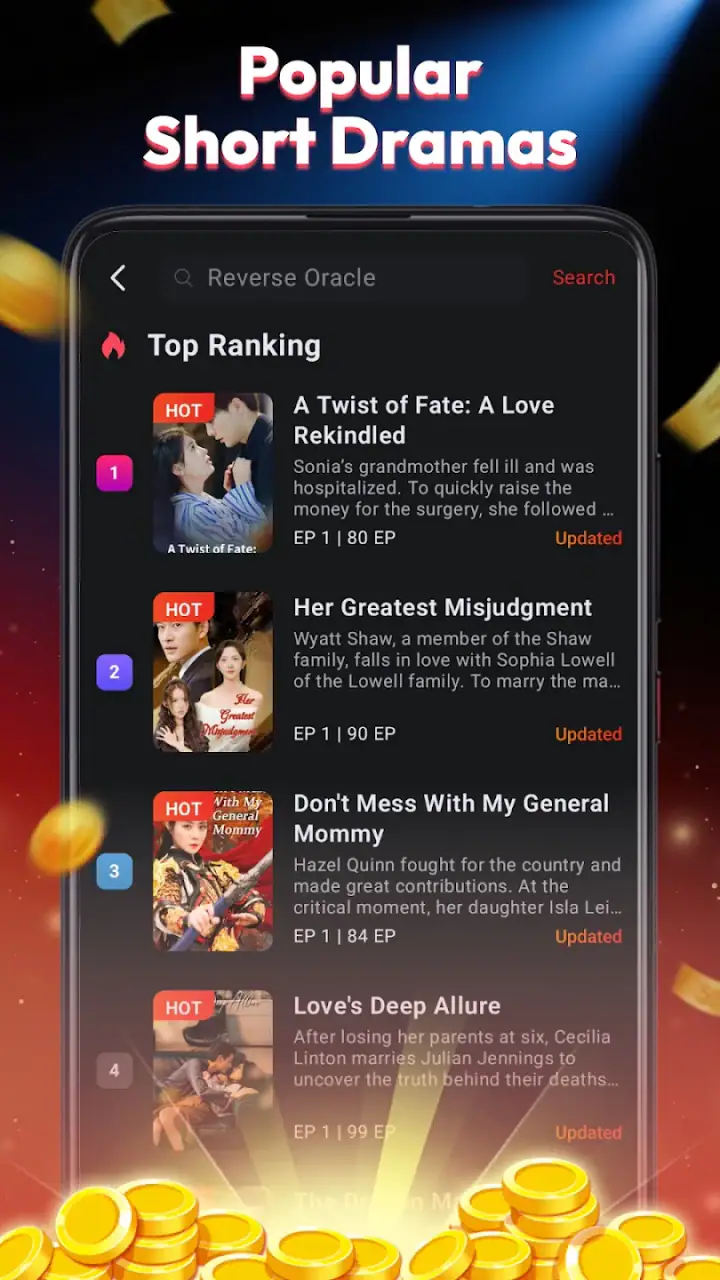
The app is less convincing for someone who wants a large, carefully organized catalog of conventional films and series. It is also not my first choice for viewers who dislike reward mechanics, interruptions, or the feeling that entertainment is being connected to a task. A standard streaming service is better when uninterrupted viewing, consistent playback, and long-form storytelling matter more than short episodes.
There is another important distinction. People who mainly want to earn money or dependable income should not treat this as a work replacement. The store positioning is about viewing rewards, not employment. I would use it for entertainment first and regard any reward as an incidental benefit, not as something to plan a budget around.
What I would check before settling into a routine
Because this app combines entertainment with rewards, I pay closer attention to the choices shown during use than I would with a simple video player. Before committing time, I would read any visible reward conditions, look at what action is required to claim a reward, and note whether a session involves an additional step after watching. Small details like these determine whether the process feels straightforward or unnecessarily demanding.
I would also review the account and device prompts carefully. The safest habit is to grant only the access that makes sense for the feature I am using, and to pause when a request is unclear. I do not assume that a reward-focused app needs every possible permission. On Android, I would revisit permissions through the system settings after installation; on iOS, I would use the app permission controls and privacy indicators to keep track of what I have allowed.
This is not a criticism of Digitnesia or a claim about a permission that is not visible here. It is simply the right way to evaluate any app that asks for personal attention and may involve an account. Trust should come from visible controls and understandable choices, not from the promise of rewards alone.
Account choices and personal control
When I use an entertainment app repeatedly, I want to know how easy it is to stop, sign out, or change my choices. I look for account controls that are easy to find rather than hidden behind several unrelated screens. I also prefer being able to decide whether notifications are useful. For a short-drama app, reminders can bring me back to a continuing story, but too many alerts can make the experience feel intrusive.
A sensible setup is to keep notifications off at first, then enable only the ones that genuinely help you follow a series or understand a reward action. This gives you a clearer idea of the app’s value without letting it set the rhythm of your day. If you stop using it, remove its permissions that are no longer needed and uninstall it through the normal device controls.
I would take the same measured approach to account information. Use the minimum personal details needed for the functions you actually want, read the in-app explanations presented at sign-up or during reward actions, and avoid entering information simply because a form makes it available. These are ordinary precautions, but they are particularly relevant when an app combines viewing behavior with an account or reward history.
The important point is user agency. A good experience should let me watch when I choose, understand why a prompt appears, and leave without friction. If the app’s controls are clear, I feel more comfortable exploring it. If I have to guess what a button, reward condition, or permission request means, I slow down and reconsider whether the convenience is worth it.
Where the reward system changes the decision
Rewards can make short dramas feel more interactive, but they also create trade-offs. The obvious benefit is motivation: a viewer who might otherwise stop after one episode may feel encouraged to continue. The less obvious cost is that the reward can become the focus, making me judge every viewing session by what I receive rather than by whether I enjoyed the story.
My advice is to test the app with a simple question: would I still watch this episode if the reward were removed? If the answer is yes, the reward system is probably adding value. If the answer is no, I would be cautious about spending large amounts of time chasing it. This test helps separate genuine entertainment from a habit driven entirely by incentives.
I would also avoid making assumptions about timing or value. Reward programs can have conditions, and the practical usefulness of a reward depends on the rules shown inside the app. Read those rules at the moment they matter instead of relying on a general impression from the store summary. That is especially important before sharing information, completing an extra action, or expecting a reward to be immediately available.
A useful workflow is to watch one short drama session, inspect the reward screen, and then decide whether the steps feel proportionate. If claiming a reward is simple and understandable, the system may remain a pleasant extra. If every session leads to multiple prompts or unclear requirements, a conventional short-video or streaming app may be a better use of your time.
Privacy-minded moments deserve extra attention
There are three points where I become particularly careful: installation, account creation, and reward collection. During installation, I check permissions rather than accepting prompts automatically. During account creation, I read the fields and explanations before submitting anything. During reward collection, I look for the exact action being requested and whether it changes what information or access I am giving the app.
These checks do not make the experience difficult. They take only a moment, and they prevent me from confusing a convenient button with an obligation. I also avoid using the same password across unrelated services. If the app offers account management options, I would use them to keep my details current and to remove information that is no longer necessary for my intended use.
I am careful not to infer hidden data practices from the app’s reward model. Watching behavior may be relevant to how an entertainment product works, but I would rely on the privacy information and choices shown by the app and the operating system rather than guessing. That is a healthier standard than assuming either that everything is harmless or that every reward system is automatically unsafe.
On a shared phone, I would be even more deliberate. I would check whether the device is locked, avoid leaving an account open for another person, and review notification previews so private account or reward details do not appear on the lock screen. These are small practical steps, but they matter more than abstract promises when several people use the same device.
Performance expectations and practical limitations
Lucky Drama’s appeal depends on quick access to short entertainment, so interruptions are more noticeable than they would be in a long film. A brief pause, an unclear loading state, or a reward prompt at the wrong moment can break the story’s rhythm. I therefore prefer using it when I have a stable connection and enough time to finish a short viewing session without rushing.
The current version is 1.2.2, and the app requires Android 8.0 or later. That makes compatibility fairly practical for many Android users, but an eligible operating system does not guarantee the same experience on every phone. Screen size, available storage, battery condition, and network quality can all affect how comfortable short-video viewing feels.
I would keep some battery awareness in mind. Short sessions can quietly become long ones when episodes lead directly into one another. If I am away from a charger, I use the app selectively rather than leaving it running in the background. I would also update through the normal app-store process when an update is offered, since current versions are generally the sensible place to evaluate an app’s available controls and behavior.
The free price is a clear advantage for casual testing. I can try the format without first committing to a subscription. At the same time, free does not mean costless: my time, attention, network data, and battery are still part of the trade. I judge the app by whether the entertainment and reward experience justify those everyday costs.
How it compares with familiar alternatives
Compared with a mainstream streaming service, Lucky Drama is more focused on short, continuing stories and less suited to a planned movie night. A streaming service usually wins for long-form quality, broad viewing sessions, and the feeling of uninterrupted playback. Lucky Drama wins when I want something compact and do not want to pay before deciding whether the format suits me.
Compared with general short-video platforms, it offers a more directed reason to watch. A social feed can provide endless variety, but it can also be difficult to stop and easy to lose time scrolling. A short-drama app gives the session a narrative thread. The trade-off is that the catalog experience may feel narrower if I want comedy clips, news, creators, tutorials, or completely unrelated topics in the same place.
Compared with reward or survey apps, Lucky Drama is more enjoyable for someone who prefers entertainment to repetitive tasks. I would not choose it as a precise earning tool, because viewing rewards are tied to a leisure activity rather than a predictable work process. If my main goal is to maximize a return for time spent, another category may be more appropriate. If my main goal is to relax and receive a small extra incentive, this app makes more sense.
A realistic way to use it without losing control
My preferred routine would be to install the app on a compatible Android device, review the initial prompts, and begin with one short session rather than enabling every option immediately. I would choose a time such as a lunch break, watch enough to understand the story style, and then inspect the reward process before deciding whether to continue.
After a few sessions, I would make a personal rule: notifications stay limited, reward conditions are read before action, and viewing ends when the planned break ends. If the stories keep me interested without making the reward feel compulsory, I would keep the app as a casual option. If I find myself opening it only to complete a task, I would remove it from my routine.
This approach also answers a common practical question: can I use it casually without becoming deeply involved in the reward system? Yes, provided I treat the app as an entertainment choice and pay attention to the controls presented during use. Another question is whether it replaces a streaming subscription. In my view, it does not. It serves a different purpose, centered on short dramas and a reward-oriented viewing experience.
My cautious verdict
I see Lucky Drama as a focused option for people who enjoy short serialized entertainment and appreciate having a reward element attached to viewing. Its free access lowers the barrier to trying it, the Everyone rating makes it broadly approachable, and the app’s audience size and strong average rating show that the concept has attracted meaningful interest. Digitnesia has positioned it for quick, repeat visits rather than traditional long-form viewing.
Still, I would not recommend installing it purely for the promise of rewards. The right choice depends on whether the dramas themselves hold your attention and whether the in-app choices feel clear. I would read reward conditions, review permissions, manage notifications, and keep account details limited to what I actually need. Those habits make the experience more deliberate and help me notice when the app is no longer worth my time.
My recommendation is cautious but positive: try it if short dramas fit your routine, use the reward system as a bonus, and keep control of your viewing and privacy choices. Skip it if you want uninterrupted films, a broad general-purpose video catalog, or a dependable earning tool. For the right viewer, it is a convenient free entertainment experiment; for everyone else, a conventional streaming or short-video alternative may be the better match.
FAQs for Lucky Drama - Shorts & Rewards
What is Lucky Drama - Shorts & Rewards?
Lucky Drama - Shorts & Rewards is an entertainment app focused on short-form drama episodes that can be watched in quick sessions. Its rewards-oriented features may encourage users to return regularly, complete viewing activities, or interact with selected in-app tasks. The exact content, reward options, and availability can vary by country, device, account, and app version, so it is worth checking the current description and terms before downloading.
Is Lucky Drama - Shorts & Rewards free to download and use?
The app is generally presented as free to download, allowing users to access its basic short-drama experience without paying an upfront purchase price. However, free apps may include advertising, optional in-app purchases, limited content, or features that require additional actions. Before watching extensively, review the store listing and in-app payment information carefully, especially if the application offers premium episodes, coins, subscriptions, or other paid benefits.
How do the rewards in Lucky Drama - Shorts & Rewards work?
Rewards may be connected to activities such as watching episodes, checking in, completing missions, viewing advertisements, or participating in promotional campaigns. The available tasks and redemption rules can change over time, and rewards are not necessarily guaranteed or available in every region. Users should read the reward conditions, minimum withdrawal requirements, expiration rules, and supported payment methods before spending significant time completing activities.
Does Lucky Drama - Shorts & Rewards require an account or personal information?
Some functions may be available immediately, while features involving progress synchronization, rewards, withdrawals, or personalized recommendations may require registration. Depending on the sign-in method, the app could request information such as an email address, phone number, or access through another account provider. Before creating an account, check the privacy policy and permissions so you understand how viewing activity and personal data may be collected or used.
Is Lucky Drama - Shorts & Rewards safe and suitable for everyone?
The app should be downloaded from an official Google Play or Apple App Store listing to reduce the risk of installing an altered or unsafe version. Because short dramas can include romance, conflict, mature themes, advertising, or user-targeted promotions, the content may not be appropriate for every age group. Parents should review the store rating, privacy details, permissions, and any available parental controls before allowing children to use it.
Pros
- Short episodes are easy to watch during quick breaks.
- Reward system adds extra motivation to keep exploring new dramas.
- Large selection of bite-sized romantic and dramatic stories.
- Simple interface makes browsing and starting episodes straightforward.
- Frequent updates may bring fresh series and additional content.
Cons
- Rewards may require considerable time or repeated actions to unlock.
- Some content and features can be limited by region or account status.
- Frequent ads may interrupt viewing
- especially for free users.
- Episodes may rely heavily on cliffhangers to encourage continued watching.
- Privacy and data-sharing details should be reviewed before signing up.


